A tetracycline teeth stain can affect the smile in ways that feel difficult to predict. For some people, the discoloration appears subtle. For others, it creates darker bands, gray tones, or uneven color that feels much harder to ignore. Since this type of staining can vary so much from one person to the next, the right treatment is not always the same for every patient. The depth and pattern of the stain can influence which options offer enough coverage and which options may be too limited. Price point, durability, stain severity, and the condition of your teeth can all help determine which treatment fits best.
At Esparza Dentistry, we help you understand the stain first, then guide you toward a treatment option that fits your teeth, your goals, and the kind of result you want to see.
What Is a Tetracycline Teeth Stain?
A tetracycline tooth stain is different from the surface stains many people associate with coffee, tea, or tobacco. Surface stains sit on the outer layer of the teeth, so brushing, polishing, or professional cleanings can often improve them. Tetracycline staining begins deeper within the tooth structure.
This type of discoloration is called an intrinsic stain, meaning the color change develops within the tooth rather than on its surface. In many cases, the stain forms in the dentin, the layer beneath the enamel. Since enamel is slightly translucent, discoloration in the dentin can show through and affect the overall shade of the tooth.
Tetracycline staining occurs when someone takes tetracycline antibiotics while the teeth are still developing. Exposure most often happens during pregnancy or early childhood, before the teeth have fully formed and erupted. During that stage, the antibiotic can bind to calcium in the developing tooth structure. As the teeth mineralize, the discoloration becomes part of the tooth from within.
For that reason, tetracycline stains are usually harder to treat than surface stains. The color cannot be simply brushed away or removed during cleaning because it is embedded in the tooth. The staining may appear yellow, gray, brown, or banded, depending on the timing and level of exposure. Teeth whitening alone may not fully correct it, and some patients benefit from cosmetic treatments that cover or mask the deeper discoloration.
Tetracycline Teeth Stain Treatment in Ontario, CA
Tetracycline staining can look different from person to person. Some patients have mild yellowing. Others have gray or brown bands across the teeth.
Since the stain develops inside the tooth structure, treatment depends on the depth, color, pattern, and severity of the discoloration. For that reason, we begin with a professional evaluation.
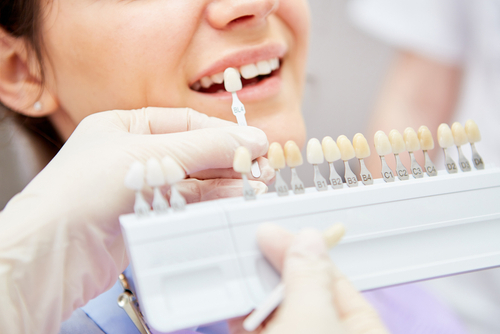
During your visit, we examine the shade of your teeth, the location of the stain, the condition of your enamel, and the overall health of each tooth before recommending a treatment plan.
Dental Bonding
For mild to moderate tetracycline staining, composite bonding may be an effective option. Bonding uses tooth-colored resin that we apply directly to the visible surface of the tooth. The material helps mask discoloration and create a brighter, more even appearance. Many patients appreciate that bonding can often be completed in a single visit. It may also work well for smaller stained areas or as a finishing touch after whitening when darker bands remain.
While bonding is often a more affordable option than other cosmetic treatments, the material may stain or wear over time and may need maintenance.
Porcelain Veneers
Porcelain veneers offer a stronger cosmetic solution for moderate to severe tetracycline staining. Veneers are thin porcelain restorations that bond to the front surfaces of the teeth, covering the discoloration underneath. Since porcelain can block deeper stains more effectively than whitening or bonding, veneers are often a helpful option when tetracycline discoloration does not respond well to other treatments.
At the same time, veneers can also improve the shape, size, spacing, and overall balance of the teeth. With proper care, porcelain veneers typically last 10 to 15 years.
Dental Crowns
Dental crowns may be recommended when tetracycline staining is very severe or when the tooth also has structural concerns, such as cracks, large fillings, wear, or weakness. A crown covers the entire visible portion of the tooth, giving us greater control over the final color and appearance. Crowns can improve the look of a deeply stained tooth while also adding long-term protection for a tooth that needs more support.
Treat Stubborn Tooth Discoloration at Esparza Dentistry
Tetracycline staining can be difficult to evaluate on your own. The color, depth, and pattern can vary from person to person, which means treatment needs to be just as specific.
At Esparza Dentistry in Ontario, CA, we examine your teeth carefully before recommending a cosmetic option. After we understand the severity of the stain and the condition of your teeth, we can help you choose a treatment plan that creates a more even, natural-looking smile.
Book your free consultation to learn which treatment option may be right for your tetracycline teeth stain.