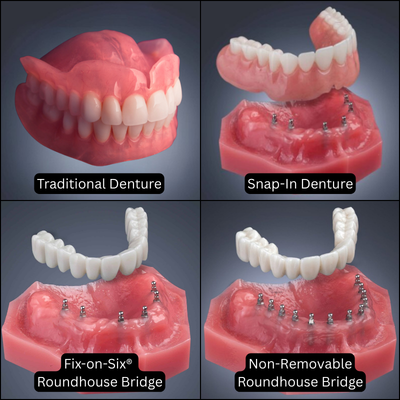
Implant dentures replace a full arch of missing teeth, but their real advantage comes from how they stay in place. A traditional denture rests on the gums and relies on the shape of the mouth for support. Implant dentures connect to dental implants that we place in the jawbone, creating a steadier foundation beneath the restoration.
That foundation changes the way the denture works. The denture restores the teeth you see when you smile, while the implants provide support from below. Instead of sitting on the gums alone, implant dentures use the jawbone for added stability.
Think of an anchor beneath a boat. The boat is the visible part, but the anchor below the water helps keep it steady. Implant dentures work in a similar way. The denture restores the visible smile, while the implants hold it in place from underneath.
Who Is a Good Candidate for Implant Dentures?
People explore implant denture options at various points in their tooth-replacement journey. Some are preparing for dentures for the first time and want a more secure option from the start. Others have worn traditional dentures for years and feel ready for an upgrade. In both cases, implant dentures may provide a stronger foundation for a full arch of replacement teeth.
Candidacy depends on several factors, including your oral health, the condition of your gums, the amount of available jawbone, and the type of restoration you need. Bone loss is often part of this conversation because tooth loss changes the jaw over time.
Natural tooth roots stimulate the bone when you chew. After teeth are lost, the bone no longer receives that stimulation. Traditional dentures replace the visible teeth, but they rest on the gums and do not help preserve the jawbone in the same way.
For long-time denture wearers, the jaw ridge may become flatter or thinner. In the past, some patients were told they were not candidates for implant dentures because they had insufficient bone density or severe bone loss. Those concerns are important, but they do not always mean implant dentures are out of reach.
At Esparza Dentistry, we use mini dental implants to support implant dentures. Mini dental implants are roughly half the size of traditional implants. Because they are narrower, we can often place them in areas of existing bone, often helping patients avoid bone grafting. For patients who have been told their options are limited, mini implants may make implant denture treatment possible.
What Are the Benefits of Implant Dentures?
Researchers often measure dental treatments using a metric called oral health-related quality of life. It examines how your teeth and oral health affect your daily life. Can you eat comfortably? Can you speak without worrying about your teeth moving? Do you feel comfortable in social situations? Does your mouth interfere with everyday activities?
When researchers compare traditional dentures and implant dentures, a consistent pattern emerges. People with implant dentures generally report a higher quality of life than people wearing conventional dentures.
What Implant Support Changes
Traditional dentures rest on the gums and can shift during everyday activities. Even a well-made denture may move slightly while eating or speaking. Over time, changes in the jawbone can also affect how the denture fits.
Dental implants create a stable foundation beneath the implant denture, helping reduce movement and improve retention. Researchers have found that patients with implant dentures often report greater satisfaction with their dentures and fewer difficulties during daily activities.
Eating and speech are the clearest examples of this. Several studies have found that people wearing traditional dentures frequently report limitations while chewing. Researchers believe those limitations can affect more than comfort alone. Food choices, meal enjoyment, and overall satisfaction with daily life can all be linked to how well a person chews.
A denture that shifts unexpectedly can create anxiety during conversations, particularly in social or professional settings. Implant support helps secure the denture to the jaw, reducing concerns about movement while speaking.
Taken together, the research suggests that implant dentures can improve the function of a full-arch restoration in everyday life.
Discover Stronger Foundation for Your Smile
Implant-supported dentures can provide a more stable, functional foundation for a full arch of replacement teeth. For first-time denture wearers, they may provide a more secure foundation from the beginning. For long-time denture wearers, they may offer a way to move away from the looseness and limitations of traditional dentures.
At Esparza Dentistry, we use mini dental implants to support implant dentures, which may make treatment possible for patients with limited jawbone. If you have been told you are not a candidate for traditional implants, or you want a denture with added stability, we can evaluate your options and help you understand what may be possible.
Schedule a free consultation at Esparza Dentistry to learn whether implant dentures are right for you.