How To Create Denture Stability
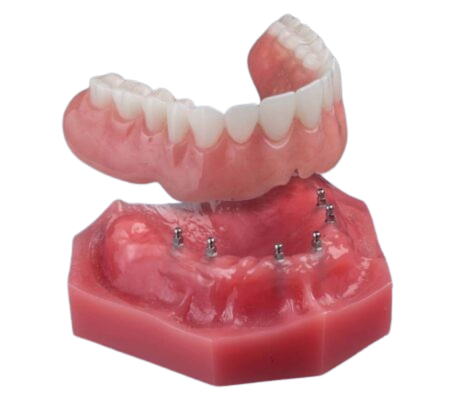
Implant dentures rely on support from the jawbone rather than just the gums. Dental implants provide that support, creating a more stable foundation for the denture.
Dental implants are small, screw-like posts, often made from titanium, that we place in the jawbone to support replacement teeth. Titanium works well for this role because it is biocompatible, which means the body usually accepts it well.
Titanium has another important quality. It can bond with the jawbone through a process called osseointegration. As the bone heals around the implant, it fuses to the surface and helps hold it firmly in place. That connection creates a stable foundation for the denture or other restoration, which gives implant dentures added support.
Titanium is also exceptionally strong and durable. It can easily withstand the pressures of chewing and biting, mimicking the natural function of tooth roots. This strength ensures implant dentures feel and function like your original teeth. Once the implants are in place, we attach the denture to them, ensuring stability and transforming it into a secure, fixed solution.
Why Does a Traditional Denture Lack Stability?
Traditional dentures sit on the gums, relying solely on suction or adhesives to stay in place. This design inherently limits their stability, leading to a host of challenges for wearers.
Natural tooth roots play an essential role in maintaining the health and density of the jawbone. Every time you chew or bite, the roots stimulate the jawbone, promoting bone strength and preventing deterioration. When teeth are lost and roots are no longer present, the jawbone begins to shrink through a process called bone resorption.
Over time, bone loss reduces the gum ridge’s shape and size, making it increasingly difficult for traditional dentures to fit securely. This movement can lead to discomfort, gum irritation, and a constant need for messy adhesives. Worse still, the lack of stimulation from tooth roots means that bone loss continues unchecked, further compounding the problem by creating an unstable base for the denture.
Why Choose Mini Dental Implants for Your Denture?
Dental implants come in different sizes and styles for a good reason: not everyone’s jawbone is the same. Bone loss can complicate implant placement. But thanks to advancements in implant technology, there are options to fit a variety of needs.
Traditional implants are about 5 millimeters wide, which makes them strong and durable. However, they need a solid foundation of bone to stay securely in place.
If your jawbone has lost density, you might need a procedure called a bone graft to rebuild the area before the implant can be placed. While bone grafts work well, they add extra steps and months of healing time. For many patients, this process can feel like a big commitment.
Mini dental implants, less than 3 millimeters wide, offer a smaller, more practical alternative. Because they don’t require as much bone support, mini implants can be used in areas with limited bone density. As a result, we can often place these implants without a bone graft. Their simplicity typically translates to shorter healing times and reduced discomfort, making them an ideal choice for a streamlined, effective solution.
Stabilize Your Denture at Esparza Dentistry in Ontario, CA
Living with a loose denture can change what you come to accept. Extra care, constant awareness, and small adjustments can start to feel like part of daily life. But they don’t have to be.
Dental implants can give your denture a more stable foundation, and mini dental implants can often do that with a simpler treatment process.
Contact Esparza Dentistry to book a free consultation. We can examine your smile, talk through your options, and help you find a solution that feels more secure, comfortable, and natural.