As your mouth changes after tooth loss, the shift does not stay limited to the teeth. The jaw begins to change as well, and those changes become more noticeable over time. Without tooth roots in place, the bone no longer receives stimulation during chewing. That loss of stimulation leads to gradual bone resorption, which reduces the structure that once supported your teeth and facial features. Missing most or all teeth accelerates that process. As that foundation changes, you may start to wonder whether full mouth dental implants are still an option.
With less bone available, placing implants in a way that remains stable can become more challenging. Traditional approaches often address this by rebuilding the bone before implants are placed, which can add time and additional steps to the process.
At Esparza Dentistry, we approach this differently. We place mini dental implants, which are smaller in diameter and require less bone for placement. By working within the existing structure, we can often proceed with full mouth dental implants without the need for more extensive preparatory procedures. For many patients, that means a solution remains within reach, even after significant changes in the jaw.
Comparing Full Mouth Dental Implants to Traditional Dentures
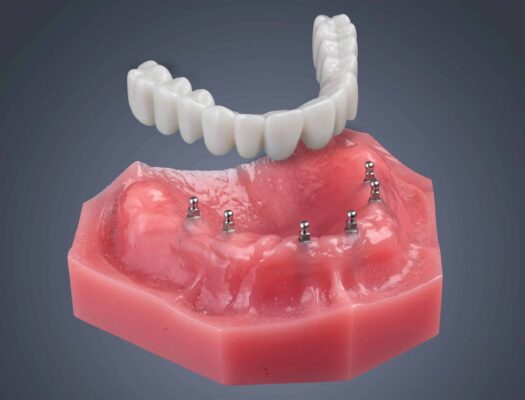
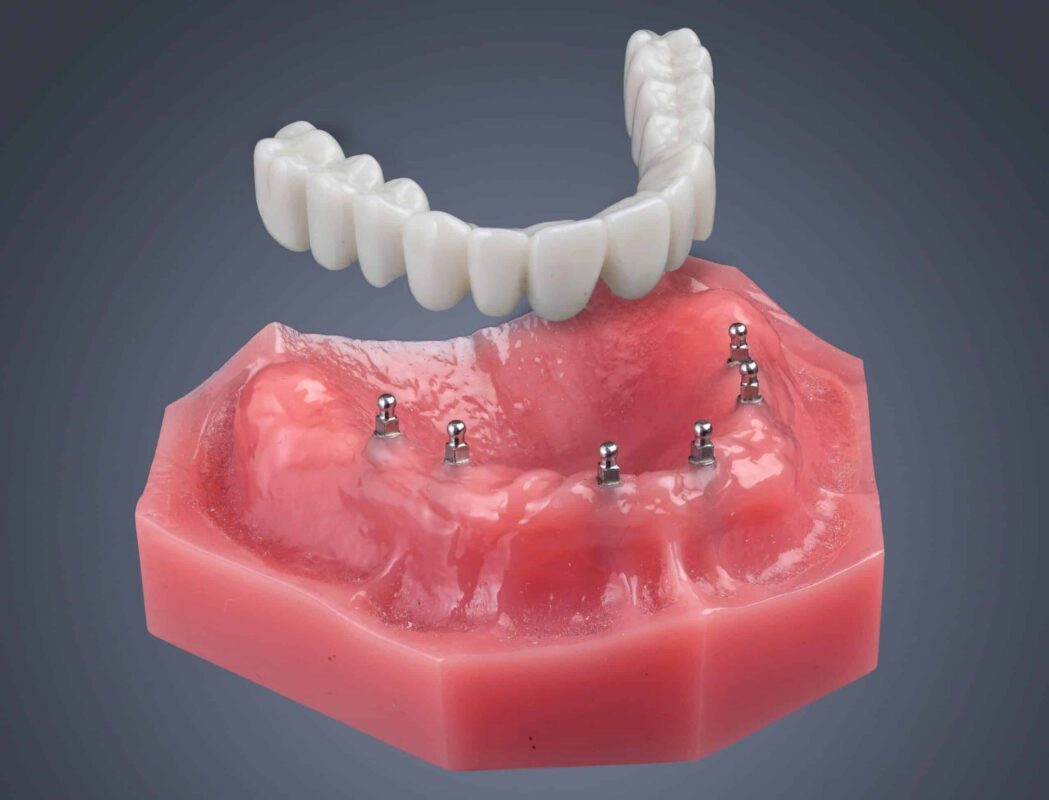
Full mouth dental implants rebuild support from within the jaw. We place a series of dental implants throughout the bone and attach a denture or a roundhouse bridge to those implants.
After placement, the surrounding bone fuses to each implant in a process called osseointegration. Over time, the implant becomes anchored in the jaw and functions in a way that closely mimics natural tooth roots. That internal support allows the restoration to stay in place more consistently and respond to pressure more naturally.
For many patients, this connection makes implant solutions one of the closest options to natural teeth in both structure and function.
On the other hand, traditional dentures remain the standard option and are often the first thing that comes to mind when people think of tooth replacement. A full denture rests along the gums and attaches through suction or adhesives, depending on the fit.
While the design restores the appearance of a complete set of teeth, it does not extend beneath the surface. The underlying bone continues to change over time because it no longer receives stimulation from tooth roots. As those changes progress, the denture’s fit can shift, requiring adjustments to maintain stability.
Implants placed in the jawbone continue to stimulate it during daily use. So, full mouth dental implants slow bone loss and preserve the support that keeps the restoration stable.
Are Full Mouth Dental Implants Still an Option After Bone Loss?
Many patients assume bone loss means full mouth dental implants are no longer an option. That idea often starts during an initial evaluation, when the available bone is not enough to support standard implant placement. At that point, the conversation can stop at “not enough bone,” leaving the impression that implants are off the table entirely.
Rebuilding the bone remains one path forward. Procedures such as bone grafting or sinus lifts can create the volume needed for traditional implants, though they add time and additional steps before treatment can continue. For some patients, that approach makes sense. For others, it may not be the direction they want to take.
Mini dental implants are smaller in diameter, measuring just under 3 millimeters, which allows them to fit into narrower areas of bone. Because of their size, placement does not depend on the same volume required for standard implants. In many cases, that means we can move forward with full mouth dental implants without rebuilding the bone first, even when bone loss has already occurred.
Find Out What’s Possible for Your Smile
If you want a solution that continues to support your jaw and stay in place throughout the day, full mouth dental implants remain within reach. Mini dental implants often make full mouth restoration possible even when bone loss has occurred. Because they require less bone for placement, we can work within the remaining structure and move forward without rebuilding the jaw first.
If you want to understand what that looks like in your case, we can evaluate your bone structure and outline the next steps. Contact Esparza Dentistry today to book a free consultation.