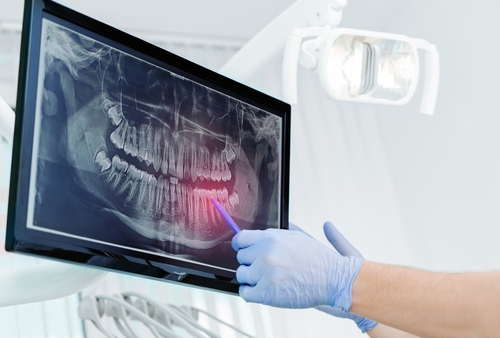
Being told you may need a tooth removed is not news anyone expects to hear. Most people come in hoping for a repair, not a removal. When patients ask, “Why would a tooth extraction be necessary?”, they are usually seeking reassurance that every reasonable option has been considered.
At Esparza Dentistry, we do not recommend extraction casually. Preserving your natural teeth is always the goal. However, when a tooth is too damaged, too unstable, or too infected to heal predictably, keeping it in place can compromise the surrounding bone and tissue. In those cases, removing the tooth protects your overall oral health and creates the conditions for proper healing.
Why Would a Tooth Extraction be Necessary?
When you hear that a tooth may need to be removed, it is natural to question why a filling, crown, or root canal would not solve the problem. In many cases, those treatments work well. We always evaluate conservative options first. However, some conditions progress beyond what a milder treatment can predictably repair. When the internal structure of a tooth is too compromised, keeping it in place may place your health at greater risk.
Decay begins in the enamel and advances inward. Once bacteria reach the pulp, infection can develop deep inside the tooth. Antibiotics may reduce swelling or discomfort, but they cannot disinfect a space that no longer has a healthy blood supply. If too much tooth structure has been lost, there may not be enough sound material left to support a corona o un filling.
Protecting the Health of Your Jawbone
Gum disease creates a different concern. Periodontitis destroys the ligaments and bone that anchor a tooth. You may notice mobility, shifting, or discomfort when chewing. Deep pockets around the gums allow bacteria to accumulate below the surface, often beyond the reach of routine treatment. When bone support has significantly diminished, the tooth cannot function without worsening the breakdown around neighboring teeth.
The body has limits on what it can heal or rebuild. Enamel does not regenerate, and advanced bone loss does not reverse on its own. Our priority is always to preserve your natural teeth when possible. When we recommend extraction, it reflects careful evaluation of your condition, your long-term health, and the stability of the surrounding structures. You deserve a clear explanation of your options and the reasoning behind every recommendation.
What Are My Tooth Replacement Options After an Extraction?
After we remove a tooth, the next question is whether the site can support a implante dental immediately. That decision depends on three factors: the presence of infection, the quality of the surrounding bone, and our ability to achieve primary stability at the time of placement.
If the tooth has an active infection, we slow down and treat that first. An abscess fills the extraction site with bacteria and inflamed tissue, preventing the bone from securely attaching to an implant. Placing an implant into an infected area raises the risk of early failure. For an implant to succeed, it must bond directly to clean, healthy bone. When an infection is present, that bond cannot form properly.
Infection can also weaken or irregularly erode the socket walls, preventing the implant from locking firmly in place. In these situations, we first eliminate the infection and allow the bone to recover before proceeding.
When We Can Place an Implant the Same Day
When infection is absent and bone quality is sufficient, we can often place the implant at the same visit. We assess the socket walls and the available bone to confirm that the implant can secure solid primary stability. When that stability is present, same-day placement is a reliable option!
Miniimplantes dentales often expand the possibility of same-day placement. They measure less than 3 millimeters in diameter, which means they require less space and less bone removal at the time of insertion.
After extraction, we create a small pilot hole and place the implant into the available bone without significantly widening the socket. That conservative approach helps preserve the existing structure and supports strong initial stability.
Conventional implants are wider and require a larger bone opening. They also need thicker, stronger bone around them to hold securely. A fresh extraction site does not always have that amount of bone right away.
Protect Your Oral Health Today
The principle is simple: protect what can still be protected. A tooth extraction is never the headline anyone hopes for, but timing matters. When a tooth has reached the point where it cannot heal or function predictably, keeping it in place does not preserve it.
If you want to learn more about your treatment options, programar una consulta gratuita. We will carefully evaluate the area, confirm whether extraction is truly necessary, and outline the most stable path forward for your long-term health.